A pair of binoculars that is clean and well cared for can last for decades, and one that is cleaned badly can be permanently marked in a single afternoon. The reason is the glass itself. Binocular lenses carry thin anti-reflective coatings that do much of the work of giving you a bright, high-contrast image, and those coatings are far more delicate than the glass underneath. Rubbing grit across them is the quickest way to ruin a good pair.
The good news is that the best cleaning method is also the simplest: do as little as you can, and do it gently. This guide explains when to clean and when to leave well alone, how to remove dust and smudges without scratching anything, how to look after the body after rain, sand or salt, how to store binoculars so they stay dry, and the point at which you should stop and send them for servicing.
How do you clean binoculars safely?
Blow or brush off loose dust first, because grit is what scratches coatings. Then dab smudges away with a clean microfiber cloth used only on optics, dampened with water if needed. Wipe the body with a damp cloth, let everything air-dry, and put the lens caps back on. Never use paper tissues, your shirt or household cleaners on the lenses, and never take the binoculars apart to clean inside.
First rule: clean less often
Several of the sources we read start with the same advice, and it surprises people: the best way to clean binoculars is to clean them as rarely as possible. Leupold puts it simply: if the lenses are not dirty, do not clean them, and clean only when you can see a problem or when it affects your view. Audubon’s binocular-care advice agrees, calling the coatings the most delicate part of the binoculars and saying they are easy to damage with careless cleaning.
Every time you wipe a lens, you risk dragging a speck of grit across the surface. Wait until there is a smudge, a fingerprint on the eyepiece or a visible film before you reach for a cloth.
The easiest way to avoid cleaning is to avoid getting the lenses dirty. Use the lens caps and eyepiece covers whenever you are not looking through the binoculars. Audubon jokes that the eyepiece cover is better thought of as a “food guard” than a rain guard, because rain does far less harm than coffee, juice or crumbs.
What you need
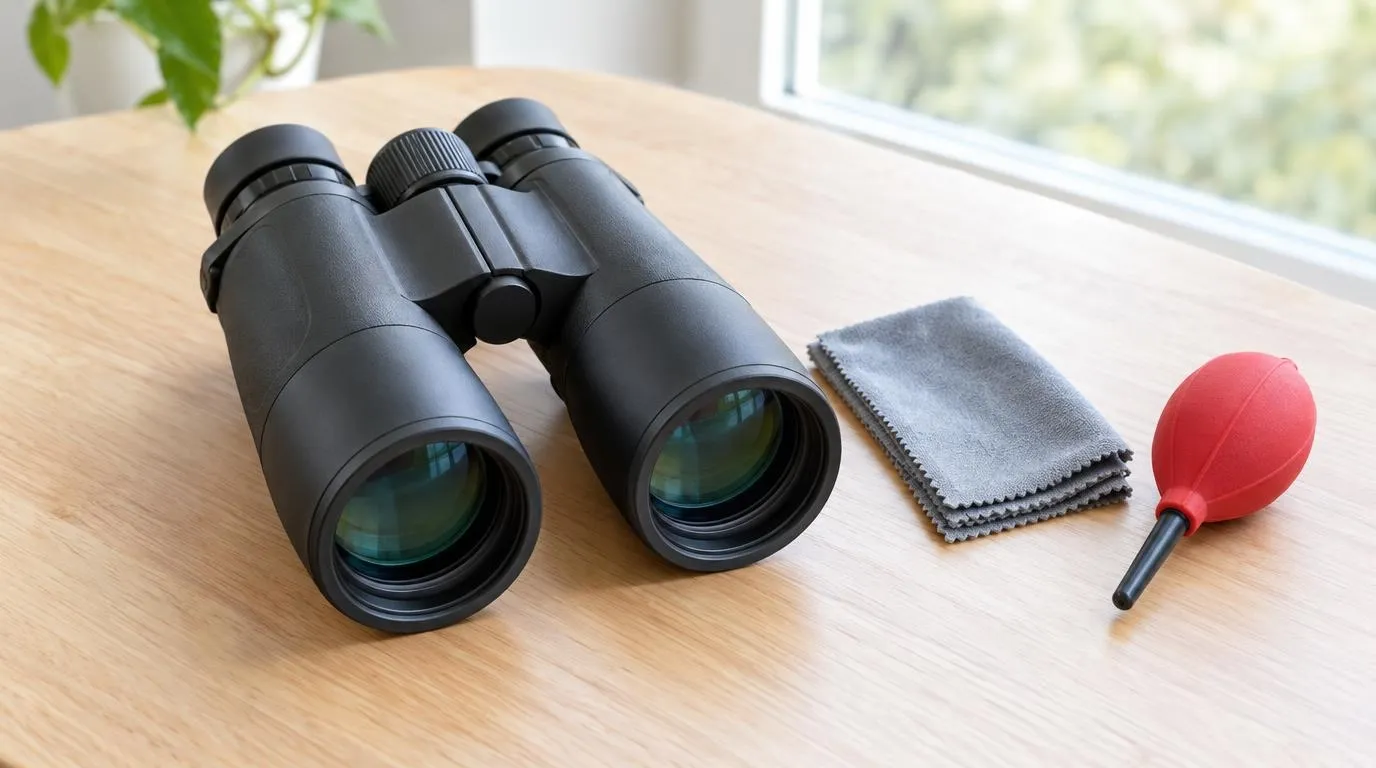
You do not need an expensive kit. A few simple items cover almost every situation.
| Item | What it is for | Notes |
|---|---|---|
| Soft lens brush or blower | Removes loose dust and grit before you touch the glass | Always the first step |
| Clean microfiber cloth | Lifts smudges and fingerprints | Keep it for optics only; store it in a clean bag so it stays dust-free |
| Lens pen | Combines a brush with a cleaning tip for small marks | Optional, and handy to carry in the field |
| Water | The gentlest liquid for both the body and the lenses | Leupold calls it the safest liquid to use |
| Optics cleaning solution | For stubborn marks that water will not shift | Use sparingly, and only products made for coated optics |
| Soft cloth for the body | Wipes the armor, barrels and focus wheel | Separate from the lens cloth |
How to clean the lenses, step by step
- Cap the binoculars and move to a clean, well-lit spot. Good light helps you see the dust and smudges you are trying to remove.
- Remove loose dust with a blower or soft brush. This is the most important step, because it takes away the grit that could scratch the coating. If you use a canister of compressed air, keep it upright; Outdoorsmans warns that tipping the can can spray liquid propellant onto the lenses.
- Do not breathe on the lens to moisten it. It can leave spots and may even damage the coating.
- Dampen a clean microfiber cloth slightly with water. It should be barely damp, not wet. If you need a cleaning solution, most guides say to put it on the cloth rather than directly on the glass.
- Wipe gently in a circular motion from the center outward. Use light pressure and let the cloth do the work. Press hard and you grind any remaining grit into the surface.
- Turn the cloth to a fresh section for each new area, so you are not spreading dirt back onto the glass.
- Let the lens air-dry or buff it lightly with a dry part of the cloth, then check the result in good light and put the lens caps back on.
Do the same for the eyepieces, which collect oils from your eyelashes and skin and are usually the first lenses to need attention. Removable eyecups can be taken off and cleaned separately.
What never to use
| Avoid | Why |
|---|---|
| Paper tissues, kitchen paper and paper towels | Wood fibers can scratch coatings, and some products contain lanolin that leaves a greasy smear |
| Your shirt or clothing | It carries dirt and rough fibers that leave fine scratches over time |
| Your breath | Leaves spots and can deposit particles |
| Harsh solvents such as acetone or ether | Can damage the coating |
| Household glass or screen cleaners | Not made for coated optics; the safe choice is water or a product made for lenses |
| Rubbing a dry cloth over dusty glass | Drags grit across the surface; always remove dust first |
Cleaning the body
The body is far more forgiving than the glass. Wipe the armor, barrels, focus wheel and hinge with a soft cloth dampened with water. Do not scrub the lens area with the same cloth. Vanguard suggests a clean cloth and warm water for the body, including the focus wheel, and cautions against submerging the binoculars for long, even when they are waterproof.
If the armor feels sticky or grimy, a damp cloth is usually enough.
After rain, sand or salt water
Rain, on its own, is no great threat to binoculars; the problem is water pooling on the lenses and blocking your view. If you are caught in a shower, put the eyepiece covers over the eyecups, and if you need to clear droplets, dab them with a microfiber cloth rather than wiping. That is Audubon’s advice, and dabbing lifts the water without dragging grit across the surface.
Sand, mud and salt are different, because they leave grit and residue behind. Audubon’s feature on making binoculars last says the single most important practice is to rinse binoculars after dirty use and let them air-dry, moving the hinges, focus knob and eyecups as you rinse so that grit does not stay in the moving parts. That advice applies to binoculars that are waterproof, which most are, and you should always confirm the waterproofing details for your own model first.
Rinse with clean water, then let the binoculars dry fully with the caps off before you pack them away. Moisture is ruinous to binoculars, so never put them into a case while they are damp.
Storing binoculars
Good storage prevents more problems than cleaning solves. These are the points the sources agree on:
- Keep them in their case with the caps on, in a clean, dry place.
- Avoid heat and direct sun. Vanguard recommends storing binoculars at home in their carrying case instead of leaving them in a vehicle, because direct sunlight may cause damage.
- Fight moisture. Sky at Night magazine suggests keeping a sachet of silica gel in the case to absorb residual moisture.
- Think about your prism type. If you have Porro prism binoculars, Audubon recommends setting the focus to infinity, with the eyepieces fully retracted, for travel or storage.
Everyday habits that save you cleaning
Most of the cleaning you will ever need to do can be prevented by a few small habits:
- Keep the covers on. Put the lens caps on the front lenses and the rain guard over the eyepieces whenever you are not looking through them.
- Use the strap. A neck strap or harness helps prevent the most common accident, which is dropping them.
- Protect them in rough country. When you push through scrub or undergrowth, hold the binoculars close to your body so branches and thorns do not catch the lenses, a tip Audubon’s care feature gives for moving through brambles.
- Keep food and drink away. Eat and drink with the eyepiece covers on, so crumbs and splashes never reach the glass.
- Handle them with clean hands. Skin oils are the main source of fingerprints on eyepieces and focus wheels, so touching only the body keeps the optics cleaner.
When to stop and get them serviced
Cleaning solves dirt on the outside. It does not solve problems inside the binoculars, and trying to is where well-meaning owners cause real damage. Outdoorsmans and Vanguard both say you should never take the binoculars apart to clean inside, and Nikon’s manual says repairs should go to an authorized service representative.
These signs mean it is time for a professional:
- Haze, dust or marks that are inside the lenses, which you can often see by holding the binoculars up to the light and looking into the front lens.
- A double image that will not merge even after you set the hinge and diopter correctly, which can mean the barrels are out of alignment.
- An image that is not normal after a drop or after the binoculars have been soaked; Nikon says to take them to an authorized service representative.
- Fogging that appears inside the lenses, which can mean a seal has failed.
Nikon also recommends regular servicing by an authorized dealer to keep waterproof binoculars in the best condition. If your pair has a lifetime warranty, check the terms before paying for repairs, because defects may be covered. Our guide on how to buy binoculars explains what warranties typically cover.
Frequently asked questions
How often should I clean my binoculars?
Only when there is a visible problem. Dust on the lenses does little harm, while frequent wiping risks scratches. Wipe the body when it is dirty and clean the lenses when a smudge or film is affecting your view.
Can I use lens wipes or glasses cleaner?
Be careful. Products made for coated optics are the safest choice, and some sources recommend using only water. Household cleaners and wipes that contain solvents can damage coatings, so if you are unsure, stick with water and a clean microfiber cloth.
Can I clean the inside of my binoculars?
No. The advice from manufacturers and optics shops is consistent: do not open them. Internal cleaning risks scratches, misalignment and damaged seals, and it may affect your warranty. Send them to an authorized service center instead.
Is it safe to rinse binoculars under the tap?
Only if they are waterproof, and you should check your model’s rating first. If they are, a gentle rinse followed by thorough air-drying is a sensible way to remove sand, salt and mud. Do not rinse binoculars that are only weather-resistant.
What is the best way to dry binoculars?
Let them air-dry with the caps off in a clean, dry place, away from direct heat. Then wipe any remaining marks from the lenses with a clean microfiber cloth before storing them in their case.
Final verdict
Treat your binoculars as you would a good camera lens: keep them capped, keep them dry and clean them as rarely as you can. When you must clean them, remove the grit first, use a clean microfiber cloth with a little water, and use gentle pressure. Keep paper, shirts and solvents away from the glass, rinse and air-dry after dirty days, and leave anything inside the barrels to a professional.
How we researched this guide
We read care and cleaning advice from manufacturers, optics retailers and birding organizations, compared where they agree, and noted the few points where they differ. Where advice depends on your particular pair, such as waterproofing, we say to check your model’s documentation. The sources are listed below.
Sources
Read in November 2026.
- Leupold: How to Clean Your Binoculars
- Outdoorsmans: How to Clean and Store Binoculars
- Audubon: The Single Most Important Way to Make Your Binoculars Last
- Audubon: The Care and Feeding of Binoculars
- Nikon Sport Optics Guide: Care and servicing
- Vanguard: The Hunter’s Guide to Binocular Care
- Sky at Night Magazine: How to clean binoculars